What Is Die Casting? Technical Full Comment: Practical Application Guide (2026)
2026-02-27 14:30:20


Die Casting is a key process for mass production of precision parts for non-ferrous metals quickly and consistently. Due to its structural strength of "high-pressure injection + precision shape duplication + high-efficiency mass production," automobiles, aerospace, electronics, medical devices, and energy storage systems (ESS) have become virtually standard processes in high value-added industries. However, many articles exposed to search results end up at the "pressure casting is a type of casting" level and often fail to connect to the process selection, material selection, defect resolution, and cost structure required in the actual field. This article provides "field-type" information that engineers and purchasers can apply immediately, summarizing the core principles of the pressure casting process, the logic of process classification and selection centered on the thermal and cold rooms, the practical selection criteria for aluminum, magnesium and zinc alloys, the response to pressure casting defects (pores, cracks, uncharged, and contracted holes), and the 2026 trend (megacasting, vacuum, low pressure, and digital casting).
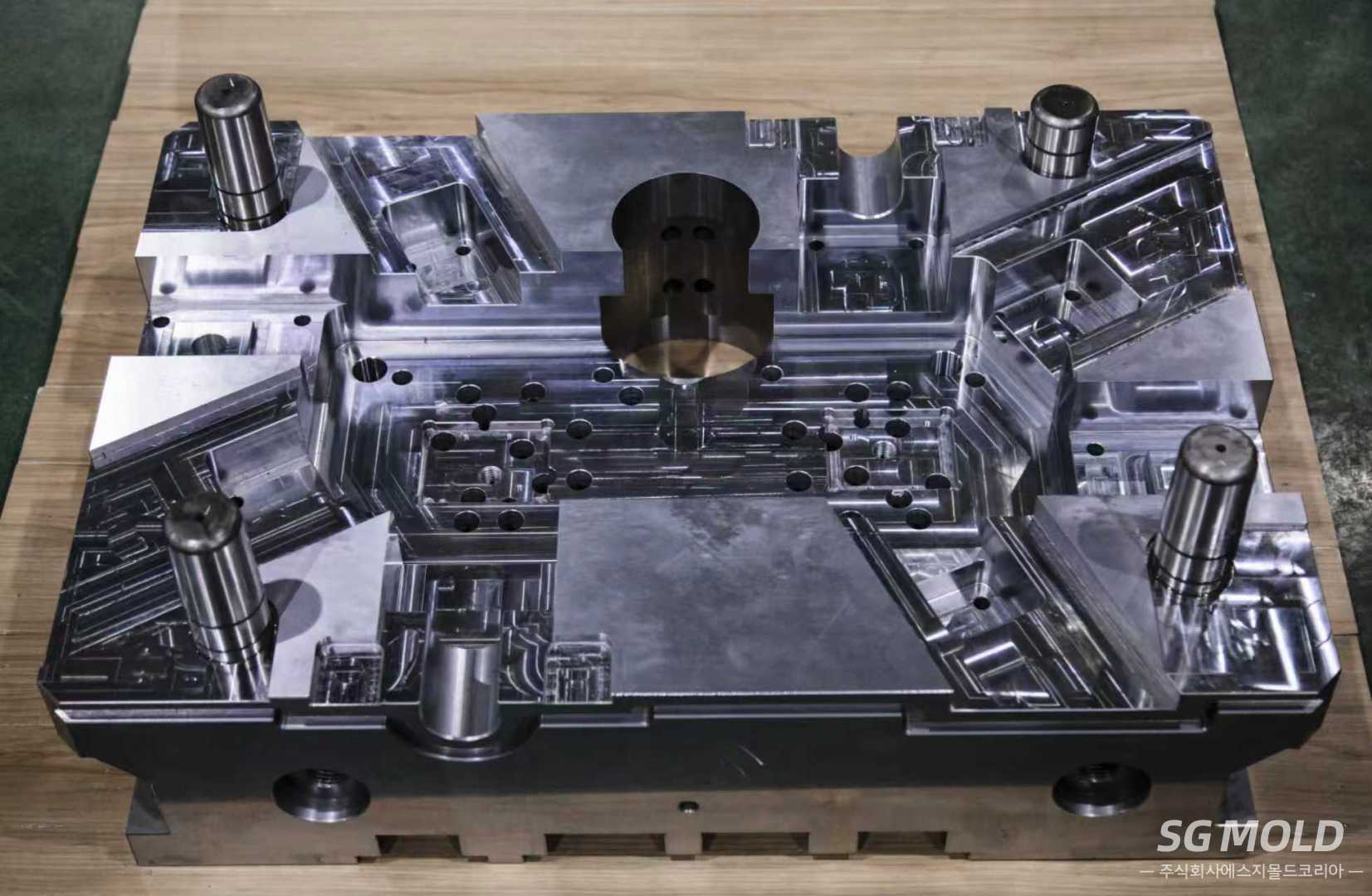
1. Die Casting Key Definition: Beyond Misunderstanding that "similar to injection molding"
Die casting and injection molding may look similar on the surface in that they "inject materials into molds to form shapes." However, the nature of the process is very different. Pressure casting brings non-ferrous metal alloys, such as aluminum, magnesium, zinc and copper, into a molten state, not plastics, which are high pressure (high pressure areas understood to be in the range of approximately 10 to 150 MPa) and high speed injection (managed by high speed charging concepts of 10 to 50 m/s in the field) before making parts from rapid cooling and coagulation. In other words, "precision metal molding for mass production that replicates shapes at once" is the core of pressure casting, and the search needs that differentiate accurately are keywords such as "Difference Between die casting and injection molding," "Die casting process principle," and "Why die casting is precise."
From a practical point of view, the competitiveness of pressure casting is also described as a quality indicator. If the conditions are well established, the dimensional tolerance can be managed very closely, and the surface roughness (Ra) is secured relatively stably, and as a result, the design can be made in a way that reduces the overall cost by reducing the weight of post-processing. In addition, since the mold is a repeatedly used structure, it is possible to consistently produce a large number of products with a single mold investment, which is a decisive characteristic that distinguishes it from sand casting or roast wax (precision casting).
2. Die Casting Process Classification: Beyond "Heatroom/Coldroom" to Selective Logic
2.1 Core process classification: Hot Chamber, Cold Chamber, Low Pressure, Vacuum
The most frequently compared classifications in the field are Hot Chamber Die Casting and Cold Chamber Die Casting. The hot chamber is a structure in which the injection meter (pressure chamber) is close to molten metal, which is advantageous for low-melting point alloys, and has a short cycle time, so mass production efficiency is excellent. Therefore, searches such as "heat chamber die casting efficiency" occur consistently in small parts or housings of the Zamak3/5/7 family.
Cold-room die-casting is a structure where molten metal and injection parts are separated and is suitable for metals with a high melting point, such as aluminum alloys (such as A380/A390/A413). This is why "cold-room die-casting aluminum" is a key keyword in automotive structural parts, housing, and industrial parts.
However, as the quality demand has risen as of 2026, the explanation has become insufficient only with the heat and cooling rooms. Low Pressure Die Casting is designed to reduce internal defects by stably charging at low pressure, and Vacuum Die Casting is focused on structurally reducing the pore problem by vacuuming the interior of the cavity. So, the trend of increasing long-tail searches such as "resolving vacuum die-casting pores" and "low pressure casting high density" is natural.
2.2 Practical logic of process selection: Not only the material but also the "required quality and cost structure"
If you simply end the process selection with "cooling room if the material is aluminum", it is often not right for the site. In practice, the direction is large based on the melting point and reactivity of the alloy first, but the product requirement level must be considered together in the next step. For example, if the appearance quality and internal defects are important at the same time, vacuum die casting can be a realistic option rather than a simple cooling room, and the application of the low pressure or vacuum concept is directly related to the quality in structural parts where precision and density are particularly important. Finally, looking at the cost and investment structure, the vacuum and low pressure increase the process cost by adding facilities and control systems, so it is necessary to calculate the added value of the product and the quality risk together. This is the point that best satisfies the search intentions such as "heating room vs. cold room selection" and "high pressure vs. low pressure difference."
3. Selection of die-casting materials: 'field type' standard for aluminum, zinc, magnesium and copper alloys
3.1 Aluminum alloy: Why die-casting is the main material and the meaning of A380/A390/A413/A518
In die-casting, aluminum alloys are most widely used throughout the industry due to their light weight (light weight), good thermal conductivity, and stable price-to-performance. However, aluminum is not all of the same characteristics, but the practical choice depends on fluidity, heat resistance, wear resistance, and corrosion resistance. For example, the A380 series is widely discussed in practice in parts where complex shape filling is important, and under high temperature and wear conditions, compositions with high silicone content such as the A390 are mentioned as options. However, the A390 is difficult to charge, so it is accompanied by "how to set the process conditions so that the complex shape does not charge." In addition, if strength and pressure conditions are important, a composition such as A413 will be considered, and if the corrosion environment is strong, a composition with a stronger corrosion resistance will be needed. In the field, searches such as "Die-casting Aluminum Alloy Type," "A380 A390 Difference," and "Die-casting Material Selection" eventually occur in units of "Alloy Name," because the material is directly related to the defective material and the post-processing cost.
3.2 Zinc Alloy: Why It Is Strong in Thermal Seal Process and Thin Wall Thickness
Zinc alloys have a short cycle time and good mass productivity thanks to their low melting temperature and excellent fluidity. That's why "thermal chamber die-casting zinc alloys" are constantly searched in electronic housings, small brackets, and household parts. The composition-specific characteristics are particularly sensitive when the thin wall thickness needs to be filled stably, and in the field, the Zamak family is approached by balancing "thin fillability" and "contraction defects."
3.3 Magnesium Alloy: Process Difficulty and Value Goes Up At The End Of Lightweight
Magnesium is extremely powerful in light weight reduction due to its low density, but its oxidation reactivity and process control difficulty go hand in hand. In other words, the actual production stability and total cost can be compromised if magnesium is chosen solely for the "lightweight requirement." As a result, magnesium is commonly considered in automotive parts and electronic device structures that require advanced weight reduction, including usage environment (wet and corrosion), process stabilization, and quality certification requirements. Keywords such as "magnesium alloy die-casting advantages and disadvantages" and "magnesium die-casting precautions" appear strongly in the search.
3.4 Copper alloys: Wear resistance, corrosion resistance, and heat conduction needs are chosen in extremely high places
The copper series performs well but has a relatively narrow application range due to its high melting temperature and process burden. Nevertheless, it is considered in abrasion-resistant and corrosion-resistant environments or parts with very strong heat conduction needs. At the site, "It is possible, but is it worth the cost of the process?" is the key to the choice.
4. 2026 Die Casting Applications: Beyond Traditional Industries, 'emerging demand' changes quality needs
4.1 Automobiles, Electronics, Aerospace: Still Central, but Requirements Changed
The automotive sector is still the centerpiece of die-casting demand. However, by 2026, it is moving in a direction where structural safety, defect control, thermal management performance, and weight reduction are required at the same time, not just a simple housing or bracket. In the electronics sector, the demand combined with "vacuum die-casting" becomes stronger as thinness, appearance quality, and surface defect suppression become more important. In aerospace, the combination of materials and processes itself is advanced because weight reduction and heat resistance and corrosion resistance are required at the same time.
4.1 Emerging Growth: Electric Vehicle Megacasting, Battery Housing, Medical Devices, ESS
When talking about the die-casting industry in 2026, megacasting is an indispensable keyword. The direction of making the body structure into a large integral by utilizing the cold chamber die-casting of large tonnage is strongly motivated by simplifying the production process, reducing weight, and reducing assembly costs. This flow is definitely linked to search terms such as "Tesla gigacasting," "megacasting aluminum alloy," and "large die-casting mold."
Furthermore, the battery enclosure and electric motor housing require pore suppression, dimensional stability, corrosion and heat conduction, and quality traceability at the same time, not just shape-making. The medical device side is accompanied by the material and surface treatment needs considering appearance quality, defect control, and sterilization environment, while the ESS field is combined with the outdoor environment and corrosion and stiffness needs. Eventually, emerging demand is elevating die-casting from a "volume production process" to a "flaw-controlled precision process."
5. Die Casting Representative Defects and Resolution: The flow of 'cause-response-verification' is more important than the name of the defect
5.1 STORAGE (Gas Porosity): the most common, most costly defect
In die-casting, pores are the most frequently mentioned defects. When the molten metal is charged, air is rolled in, exhaust design is insufficient, or gas management of the molten metal itself is unstable, the pores increase. This problem is linked not only to surface quality but also to internal strength and leakage problems, so "di-casting pore solving" and "die-casting pore cause" lead to representative search needs. In practice, exhaust structure, process conditions (charging speed, pressure profile), and molten metal management interlock together, and vacuum die-casting can be a structural solution for advanced needs. In the verification stage, it is common to check the internal condition with non-destructive tests such as X-rays.
5.2 Cracks: 'Fatal defect' caused by shaking mold temperature and solidification behavior
Cracking is not just a defect in appearance, but a signal that the material, solidification, temperature distribution, and mold opening and closing conditions have collapsed in combination. If the wall thickness difference is large, the temperature distribution of the mold is uneven, or the conditions with a strong brittleness tendency overlap, the risk of cracking increases significantly. "Causes of Di-casting Cracking" and "Countermeasures of Di-casting Cracking" are strong in the search because cracks are often not solved by reprocessing.
5.3 Uncharged (insufficient charging): 'triangular' problem of material fluidity, gate design, and process conditions
If you choose a material with a complicated shape or insufficient fluidity, or if the gate and runner design are at a disadvantage, you will not be charged. At this time, rather than simply speeding up, the field narrows down the cause by looking at the balance of product shape, flow path, and temperature and pressure together. That's why keywords such as "Dicasting Uncharged" and "Gate Design Uncharged" often appear.
5.4 Shrinkage/shrinkage: How much coagulation contraction is controlled by 'boosting and cooling design'
A contraction defect begins with a physical phenomenon in which the material contracts during the solidification process. Therefore, when the holding pressure condition and the cooling design do not match well, the internal density will collapse and the defect will occur. Because this area is strongly combined with mold design (cooling circuit) and process condition (holding pressure and time), it is important to manage reproducible conditions, not just field "know-how".
6. Cost structure and cost reduction: see as "total cost (TCO)", not "unit price"
Mold and process stabilization costs account for a large portion of die-casting costs. Mold should be viewed as total cost including maintenance and life, not just simple manufacturing cost, but mold steel selection, surface treatment, and maintenance cycle will vary depending on production and quality requirements. In addition, the actual cost depends on the alloy unit price as well as the recovery and reuse (return) management and process scrap ratio. Finally, since post-processing cost is "reduced cost if made precise from the beginning," reducing defects and variations through process conditions and mold design is the biggest saving point. This flow is how it actually satisfies search intentions such as "reducing die-casting cost", "die-casting cost", and "how to reduce post-processing cost".
7. 2026 Die Casting Trend: Large, Flawless, and Digitization Goes On At The Same Time
Die casting in 2026 definitely moves in three directions. The first is large-scale integration (megcasting), in which mold design, large-scale processing, and process stabilization capabilities shift to the center of competitiveness while molding large structures at once. The second is flawless (expanding vacuum and low pressure), and structural reduction of pores and internal defects has become a de facto essential option in high-end industries. The third is digital casting (sensor-based process control), which strengthens the direction of stabilizing process conditions and lowering defect rates based on temperature, pressure, and speed data. The combination of these three axes naturally increases the demand for search for keywords such as "die casting technology advancement," "vacuum die casting trend," and "digital die casting."
8. Die Casting Company (Supplier) Selection Guide: 'Technology, Quality, Verification' Prior to Price
When choosing a die-casting company, it is difficult to draw a conclusion only by comparing the unit price. Since die-casting is a structure in which molds and processes dominate the quality, how much the supplier controls the response to mold design, manufacturing, and modification, how many process options such as heat chamber, cold chamber, vacuum, and how to verify defects through inspection systems such as X-rays determine the actual risk. Also, delivery stability and process reproducibility are the key in mass production, so production capacity and quality system must be combined. Therefore, keywords such as "die-casting company selection criteria" and "excellent die-casting factory" converge towards quality and risk management in the end in the search.
FINISHING: In 2026, the core of die-casting moves beyond "precision mass production" to "flaw control."
Die-casting is a process of repeatedly producing precision parts based on a single mold, and in 2026, it is evolving stronger into a "precision mass production process that can control defects" through the expansion of electric vehicle megacasting, battery and motor housing, medical devices, and ESS. At the site, quality and cost are stabilized by connecting process selection (heat chamber, cold chamber, vacuum, low pressure), material selection (aluminum, zinc, magnesium, copper alloy), and defect response (pores, cracks, uncharged, and contracted) in one flow. I hope this article will serve as a reference point to help practitioners with search intentions such as "die-casting process principle", "heat chamber vs. cold chamber die-casting", "resolving vacuum die-casting pores", "die-casting aluminum alloy type", and "die-casting company selection criteria".